Origin Story
I Want the
real thing
My stepdad was self-employed my whole childhood. When I was young he ran an automotive repair shop. Later that closed and he started a mini storage business and a car wash. The smini storage had a shop in the main office. he had tools for machining, woodworking, electronics, automotive, and many other tools that most kids don't have access to.
His brother was an electronics engineer. The two of them built products together, my dad doing much of the mechanical and construction side. I grew up inside that, cars, fabrication, circuits, and the assumption that if you wanted something you went and made it. So I did.
I wanted a Gundam. I wanted Power Ranger weapons. I wanted a lightsaber. And more than anything, I wanted a hoverboard. I dreamed about having one for my entire childhood. I was inspired by jazz jackrabbit on windows 95, and of course back to the future. I built hovercraft after hovercraft, changing the design every time, trying different ways to power them. Leaf blowers. Squirrel cage fans. Most of the earliest attempts actually worked.
The lightsabers started as painted cardboard tubes. By thirteen I had built a hard plastic blade with LEDs running up the inside, and a hilt that made sound, detected a clash against another blade, and flashed on impact. The clash sensor was a spring wrapped around a nail — take a hit, the spring deflects into the nail, the circuit closes. This was the early 2000s, well before most of that was something a kid could buy. It took Best in Show at the Greene County Fair. I still have it.
I don't want to own a fake thing. I want to own the thing.
In my early twenties my mom put together a portfolio of every drawing of mine she could find from when I was a kid. Flying cars. Jet engines. Costumes and weapons. Lightsabers and robots. It's a wild assortment and I'm very glad I still have it.
Around 2010 I finally bought a high-powered laser diode and put together my first real laser. That was the game changer. I started putting lasers into everything, making them as small as I could. Palm-sized pieces that would still burn wood, and as I could afford it, they became more and more powerful. That line runs straight through to the Arm Cannons and lightsabers that you see me making now.
In 2015 I revealed the hoverboard at the Science Center of Iowa. By then the technology had caught up: RC motors, centrifugal compressors, EDF motors. The thing I'd been chasing since childhood, small and powerful and real.
I have been going to the Science Center of Iowa for the maker fair every year for the last decade.
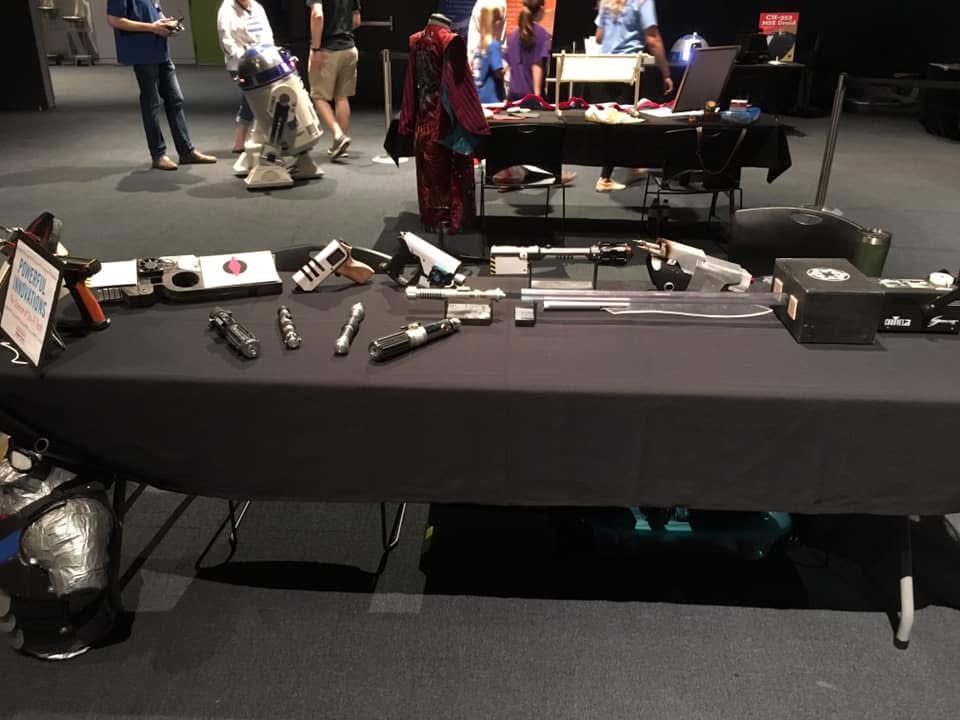
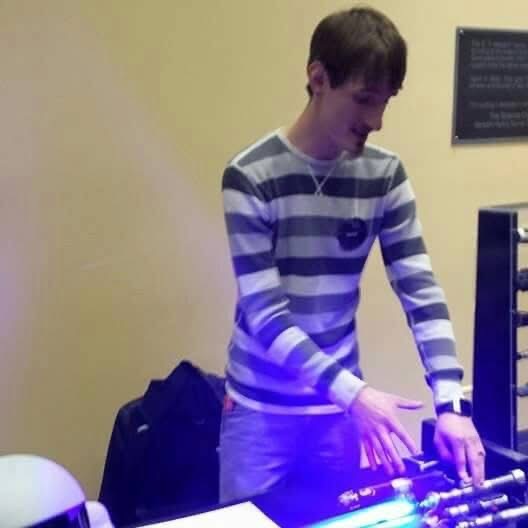
People call these props. I don't. To me they are attempts at building the real thing. If I want the armor from a movie, why would I want a fake version? I want it to do what the movie shows it doing, as close as I can get. I think technology is a kind of magic, and I want to use that magic to give myself the things that make my world incredible — the tools that make the superhero cool, the devices that make a world feel like science fiction. The moment you actually own that piece, it stops being fiction. At what point do my attempts actually make the thing real?
The wind career came out of skills I already had, and then pushed them much further: high voltage, hydraulics, pneumatics, mechanical systems, PLC programming, fiber optics — and mentors who taught and guided me along the way. When I moved from the field to the training side I went deeper still: safety and first aid, climbing and work at heights, rope access. I spent just over three years at ENSA training wind technicians, travelling the country and meeting people everywhere I went. In 2025 I took a position as instructor and wind coordinator at Iowa Lakes Community College, teaching PLCs, digital electronics, solar, hydraulics, motors and generator theory.
All of it stacked. I can now confidently say I believe in my ability to build almost anything I can imagine.
I started the channel because I needed somewhere to send people. When I talked about my projects I wanted to be able to show them, so they'd believe what I was saying. I've never been big on making videos. There are plenty of projects, including large ones, that have never been filmed at all. But when people do watch, I hope they come away believing what I believe: that the future is already here all around us, and we just have to bring it out, the way a painter brings the painting out of the canvas.
My projects are my art. And my art is how I see the world.
Service Record
Kid
Stepdad's ShopMachining, woodworking, electronics and automotive work. Learned by being in the room.
Early
2000s First Real LightsaberLit blade, sound, and a clash sensor made from a spring and a nail. Age 13. Best in Show, Greene County Fair.
2000s First Real LightsaberLit blade, sound, and a clash sensor made from a spring and a nail. Age 13. Best in Show, Greene County Fair.
2010
First High-Powered LaserBought a real laser diode. Everything changed.
2015
Hoverboard RevealedUnveiled at the Science Center of Iowa. A childhood chase, finished.
2016
Channel LaunchedSomewhere to send people. The HERF gun finds 262K viewers.
2022
–2025 ENSAJust over three years training wind technicians, travelling the country.
–2025 ENSAJust over three years training wind technicians, travelling the country.
2025
–now Iowa Lakes Community CollegeInstructor and wind coordinator. PLCs, digital electronics, solar, hydraulics, motors and generator theory.
–now Iowa Lakes Community CollegeInstructor and wind coordinator. PLCs, digital electronics, solar, hydraulics, motors and generator theory.
2024
Open SauceWore the steel water-cooled armor to the show floor.
2026
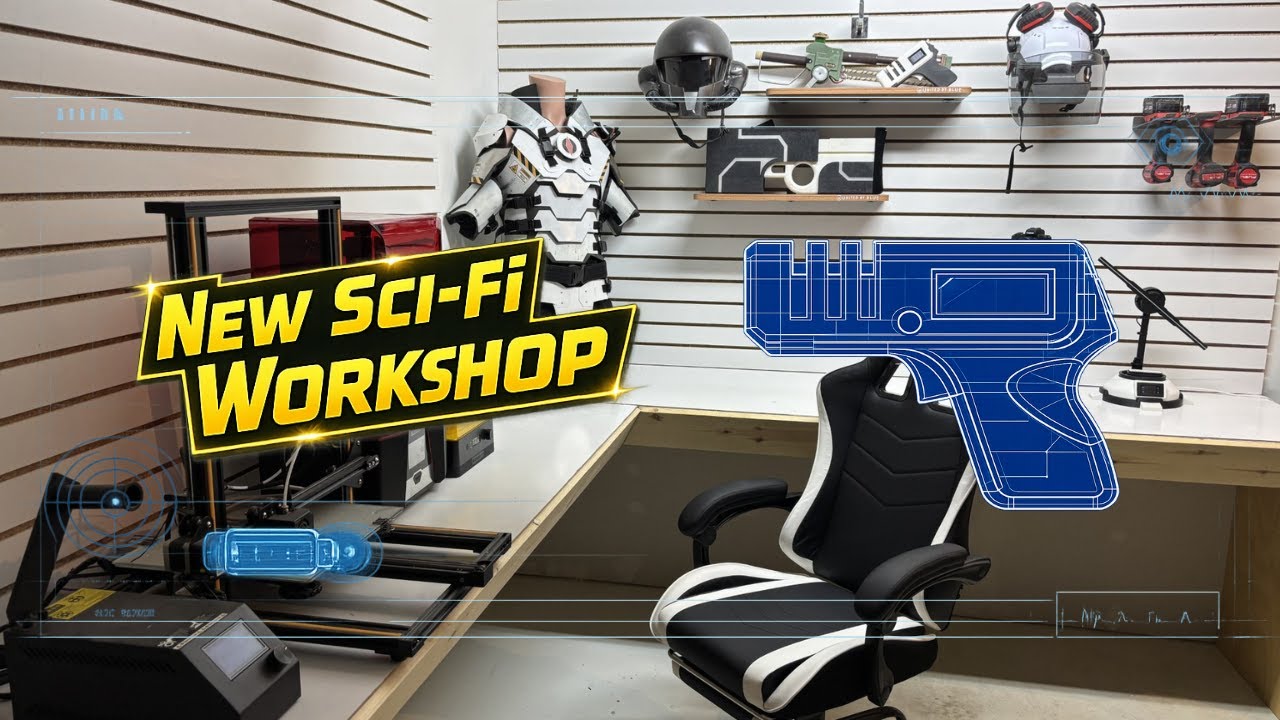
New ShopBigger space, better tooling, a new era of builds.